
These are broad highlights of what the world at large was like in the early 1920s to bring context to this project.
If you feel we missed something major and germane to this project, we are happy to take your sourced suggestions. Please email Lisa Wartenberg Velez at Lisa.Wartenberg-Velez@uvm.edu.
January 17, 1920

Prohibition Enacted
At midnight on January 17, 1920, the country went dry, following the ratification of the 18th Amendment in 1919. This made illegal manufacturing or selling "intoxicating liquors."
The Federal Volstead Act shuttered taverns, bars, and saloons across the country, championed by the American Temperance Society, formed in 1826.
Any beverage with more than 0.5% ABV was prohibited.
The liquor trade moved underground -- with speakeasies facilitating the illegal sale of liquor across America's cities.
For more
Prohibition: Topics in Chronicling America, Library of Congress
Prohibition: A Case Study of Progressive Reform, Library of Congress
Songs of the Temperance Movement and Prohibition, Library of Congress
"Prohibition and Its Effects" by Lisa Anderson, Gilder Lehrman Institute of American History.
August 18, 1920

19th Amendment Ratified
With the 19th Amendment to the US Constitution ratified, women gain the right to vote. It is worth noting that, at the time, it granted only white women the right to vote.
White Americans continued to use tactics to prevent Black, Indigenous, and other persons of color from voting.
Black, Indigenous, Latine, and other women and men of color did not have their right to vote ensured more than 40 years later, during the 1964 Civil Rights and 1965 Voting Rights Act.
For more
19th Amendment to the U.S. Constitution: Women's Right to Vote (1920). Milestone Documents, National Archives.
"How the Suffrage Movement Betrayed Black Women," New York Times. Article by Brent Staples (2018).
"Unlearning History: The Women's Suffrage Movement," PBS. Paula Hill (2020).
"The Troubling History -- and Unfinished Work -- of the Suffragists," The Intercept. Article by Natasha Lennard (2020).
1916-1970

The Great Migration
In U.S. history, the Great Migration describes "widespread migration of African Americans in the 20th century from rural communities in the South to large cities in the North and West.
At the turn of the 20th century, the vast majority of black Americans lived in Southern states. From 1916 to 1970...it is estimated that some six million black Southerners relocated to urban areas" like Chicago, Detroit, Cleveland, and New York City.
The exodus was triggered by poor economic conditions in the South -- "exacerbated by the limitations of sharecropping, farm failures, and crop damage from the boll weevil -- as well as ongoing racial oppression in the form of Jim Crow laws." (Source: Britannica).
For more
"Returning South: A family revisits a double lynching that forced them to flee to Chicago 100 years ago." Chicago Tribune. Original on September 17, 2020.
The Great Migration (1910-1970). African-American Heritage. National Archives.
Ellis Island, 1921 – 1924

Limits on Immigration
Ellis Island, which first opened its doors on January 1, 1892, began to curtail its entry to new immigrants in 1921 with the Emergency Quota Act.
Three years later, the Immigration Act of 1924 is passed, and the country sees a sharp decrease those allowed entry into the United States.
The nature of Ellis Island changes this year, too. Whereas before, Ellis Island signified a welcome into a new country and a new life for displaced persons, it became a detention and deportation point for "illegal aliens" and those who violated immigration terms.
It would later serve as an enemy detention center during World War II and through the late 1950s. In November of 1954, Ellis Island and its thirty-three structures officially closed its doors.
For more
Overview + History, Ellis Island Foundation, Inc.
Immigrant Oral Histories, Ellis Island Foundation, Inc.
Immigration on Ellis Island, National Park Services
November 2, 1920
Birth of Mass Media
Pittsburgh-based station KDKA conducted the nation's first commercial broadcast, with the support of Westinghouse (one of the leading radio manufacturers at the time), disseminating Harding-Cox presidential election results in real-time. Radios went from a novelty for hobbyists (ham radios) to a vehicle for entertainment and advertising. The Federal Radio Commission was established in 1927 giving shape to the frequencies of airwaves and to the burgeoning industry.
For more
Hear the first broadcast here, KDKA, 1920.
"KDKA begins to broadcast," PBS via the Internet Archives' Wayback Machine.
"KDKA's Historic Broadcast," CBS News. 2012.
1920-1925

Ku Klux Klan Membership Grows
The Prohibition helped the white Protestant terrorism group known as the Ku Klux Klan flourish, with a boom in membership of some two to five million members. This was the Klan's second incarnation, having already been shut down by the government during Reconstruction.
The 1915 film The Birth of a Nation romanticized the terrorist group. Fueled by this propaganda and growing anti-immigrant legislature, the Klan positioned itself as an extension of the law, targeting Catholic and immigrant communities in the name of enforcing Prohibition as a vigilante police group.
It utilized auxiliary groups, such as the Women of the Ku Klux Klan and three KKK youth groups, to spread its vitriol and terrorism across the North and South, with aims to 'purify' the country.
For more
Why the Ku Klux Klan Flourished Under Prohibition, Smithsonian Magazine (2017)
The Roots of America's First Homegrown Terrorist Movement, TIME Magazine (2023)
October 31, 1922
The Rise of Fascism
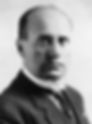
As a challenge to the threats of communism, dictator Benito Mussolini rose to power in Italy until 1943 as its 40th Prime Minister, with strong support from the upper classes -- and with him, fascism. Ultimately disgraced, his legacy looms large even today.
For more
"The Return of Fascism," The Atlantic. Article by Ruth Ben-Ghiat, 2022.
"Fascism and Mussolini," Khan Academy, World History.
December 6, 1922

Irish Free State
The Anglo-Irish Treaty ends the three-year Irish War of Independence between forces of the Irish Republic (the Irish Republican Army) and those of the British Crown.
For more
"Ireland 1922: The key figures in the new Irish Free State," BBC News. Article by Luke Sproule (2022).
The Irish Republic. McCardle, Dorothy (January 1999). Wolfhound Press.
May 10, 1924

J. Edgar Hoover
At age 29, J. Edgar Hoover is appointed as the head of the Bureau of Investigation, later to be known as the Federal Bureau of Investigation (FBI). He would serve as the head of the top national law enforcement agency for 48 years until his death in 1972 as a controversial figure.
For more
J. Edgar Hoover, Free Speech Center at Middle Tennessee State University
"Biography traces public support for J. Edgar Hoover in most of his 48 years in power," NPR Books
Use the buttons below to navigate to other parts of the '24: Then and Now digital project.
 |  |  |  |
24 Then and Now - The World at Large
Lisa Wartenberg Vélez
October 1, 2024